


-

Add: HeBei ShengShi HongBang Cellulose Technology CO.,LTD.
-

Email
13180486930@163.com -

CONTACT US
+86 13180486930





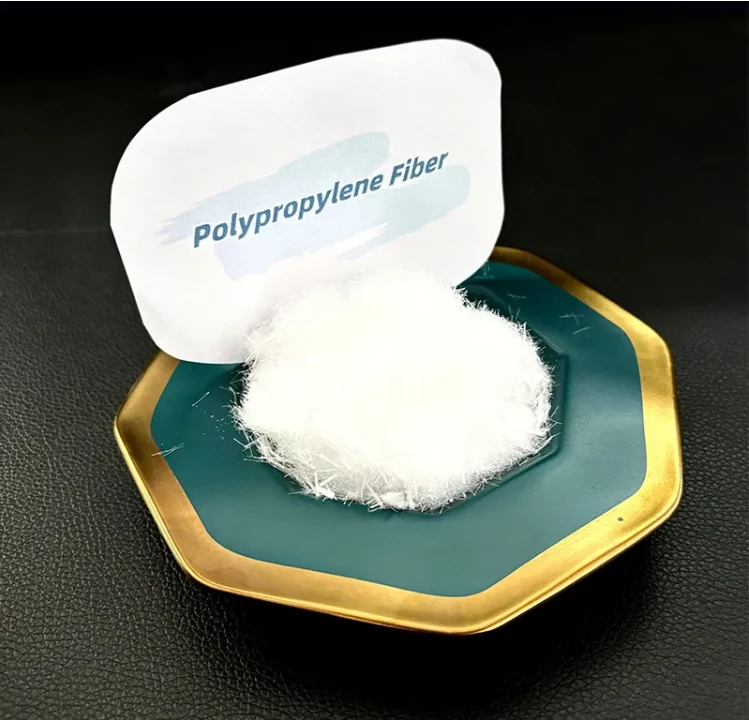
Polypropylene fiber is an innovative material that significantly enhances the performance characteristics of concrete and mortar, making it an essential component in modern construction applications. As a premier supplier, HeBei ShengShi HongBang delivers premium-grade polypropylene fibers that meet rigorous international standards for strength, durability, and performance optimization. Technical Specifications of Premium Polypropylene Fibers Parameter Standard Value Test Method Performance Benefit Fiber Length 3-20 mm ASTM D2130 Crack control optimization Diameter 18-45 microns ISO 1888 Optimal reinforcement distribution Tensile Strength 400-750 MPa ASTM D2101 Structural reinforcement Elastic Modulus 3.5-10 GPa ISO 527 Flexural strength enhancement Melting Point 160-170°C ASTM D7138 Heat resistance Density 0.91 g/cm³ ISO 1183 Ease of mixing Alkali Resistance >95% ASTM C1116 Concrete matrix longevity Dosage Rate 0.6-1.8 kg/m³ ACI 544 Plastic shrinkage reduction Industry Applications & Technical Advantages Concrete Reinforcement Our pp fiber products reduce crack formation by up to 85% while improving impact resistance by 150% (ACI Materials Journal). Mortar Enhancement Microfiber synthetic additives decrease permeability and improve freeze-thaw durability in mortar applications. Pavement Construction Integrating polypropylene fibre extends road lifespan by minimizing reflective cracking (Journal of Materials in Civil Engineering). Industrial Flooring Our fibers increase abrasion resistance and eliminate joint spacing limitations in warehouse slabs. Performance Analysis of Polypropylene Fibers Comparative strength development in fiber-reinforced concrete Surface durability under abrasion testing cycles (ASTM C944) Global market growth projections for synthetic fibers (2024-2030) Technical FAQ: Polypropylene Fiber Applications What fiber length provides optimal crack control? For most concrete applications, 12mm fibers demonstrate optimal performance with uniform dispersion and maximum crack-bridging capability according to RILEM technical recommendations. For spray applications, 6mm microfibers are preferred. How does aspect ratio affect reinforcement? Aspect ratio (length/diameter) directly influences bonding strength. We manufacture fibers with 200-500 ratios ideal for different mix designs. Higher ratios increase tensile strength but require careful mixing procedures. What polymer grade is suitable for aggressive environments? Our chemically-modified homopolymer fibers with pH stability from 1-13 withstand harsh chemical exposure exceeding 20 years according to ASTM C666 freeze-thaw certification. How does dosage affect compressive strength? Optimal dosages between 0.9-1.2kg/m³ increase compressive strength 15-20% as documented in ACI 544.3R reports. Higher dosages improve toughness but may slightly decrease workability. What surface treatments enhance bonding? Our proprietary hydrophilic coating improves fiber-matrix bond strength by 30% compared to untreated fibers (CTLGroup testing). This treatment also reduces mixing time. How do synthetic fibers compare to steel reinforcement? While steel provides primary reinforcement, polypropylene fiber offers secondary reinforcement with superior crack control, corrosion resistance, and freeze-thaw protection at 1/10 the material cost. What certifications does your production meet? Our manufacturing facility is ISO 9001:2015 certified with individual products meeting ASTM C1116, EN 14889-2, and JIS A6204 standards for consistent quality assurance. Industry Recognition & Technical Validation "Recent studies confirm that properly engineered polypropylene fibers can extend concrete service life by 40-60% by effectively controlling microcrack formation during critical curing stages." - International Journal of Concrete Structures and Materials Additional Technical References: "Performance Evaluation of Synthetic Fiber Reinforced Concrete" - American Concrete Institute ( www.concrete.org ) "Global Fiber Market Analysis 2023" - Fiber Cement Composite Research Council ( fibercomposites.org ) "Durability Enhancements through Microfibers" - Journal of Building Materials Science ( jbms.build ) "Comparative Analysis of Fiber Reinforcements" - Materials and Structures Journal ( matsstruct.springer.com ) "Advanced Production Techniques for PP Fibers" - International Fiber Association ( globalfibers.org ) Request Your Technical Sample Package Experience the ShengShi HongBang difference in our premium polypropylene fiber products engineered for superior performance. Contact Our Engineering Team Call: +86 13180486930 Email: 13180486930@163.com
- 40000tons

Production
- 20+years

Experience
- 5000+㎡

Acreage

-

The emergence of HPMC nasal spray as a potential tool in the fight against COVID-19 has garnered significant attention from healthcare professionals, researchers, and the general public alike. Hydroxypropyl methylcellulose, or HPMC, is a versatile compound widely used in the pharmaceutical industry for its binding properties and safety profile. Its introduction into nasal spray formulations presents a novel approach to mitigating the risk of COVID-19 transmission and providing an additional layer of protection alongside vaccines and other preventive measures. HPMC Nasal Spray A Clinical Insight Amid the pandemic, various studies have explored the efficacy of nasal sprays in preventing viral infections. The primary function of an HPMC nasal spray is to form a protective barrier on the nasal mucosa . This barrier effectively traps viral particles and aids in their removal, reducing the likelihood of them entering the respiratory system. The spray's mechanism relies on the unique properties of HPMC, which allows it to adhere to the nasal lining and create a physical shield without causing irritation or adverse reactions. Researchers exploring HPMC nasal sprays have noted their potential in lowering viral load in the nasal passages, a critical site for initial coronavirus infection. Several clinical trials have been conducted to determine the spray’s effectiveness in real-world scenarios, offering promising results in reducing transmission rates among individuals exposed to COVID-19. Expert Opinions and Guidance Leading virologists and epidemiologists emphasize that while HPMC nasal sprays are not a standalone solution to COVID-19, they can be an effective adjunct to vaccination, mask-wearing, and social distancing. The spray’s ease of use and lack of systemic absorption make it a suitable option for individuals who seek additional protection, especially in high-risk environments such as healthcare settings, crowded public spaces, and among vulnerable populations. Medical professionals recommend the strategic use of HPMC nasal sprays as part of a comprehensive COVID-19 management plan. The spray should be used according to the manufacturer's instructions, typically involving application before exposure to crowded places and regular reapplication for continued efficacy. Building Trust Through Proven Safety hpmc nasal spray covid A key factor contributing to the trustworthiness of HPMC nasal sprays is their safety profile. Derived from cellulose, HPMC is non-toxic, non-allergenic, and widely recognized as safe for use in pharmaceutical and food products. Its application in nasal sprays is supported by extensive research demonstrating minimal risk of side effects, making it suitable for broad public use, including children and individuals with underlying health conditions. Moreover, reputable health organizations and regulatory bodies have begun acknowledging the potential advantages of barrier nasal sprays in respiratory viral protection. Although official endorsements are still emerging, the consistent findings across various studies highlight the spray's potential benefits and safety, encouraging more robust exploration and use. Real-World Experience Testimonials and User Satisfaction Users of HPMC nasal sprays have reported a sense of added security when engaging in daily activities, particularly in scenarios where social distancing is challenging. Many appreciate the spray's non-invasive nature and ease of integration into their routine preventive measures. Testimonials often mention the spray's convenience, noting its unobtrusive application and absence of any noticeable discomfort or side effects. Additionally, users have expressed satisfaction with the spray's perceived effectiveness, reinforcing its credibility as a practical preventive measure. However, they also acknowledge the importance of complementing its use with vaccination and other recommended practices for holistic COVID-19 protection. Concluding Perspective The innovation behind HPMC nasal sprays represents a significant step forward in respiratory disease prevention, particularly in the context of COVID-19. By leveraging its expertise in pharmaceuticals and understanding the dynamics of viral transmissions, the development of HPMC nasal sprays adds a valuable tool to the arsenal against COVID-19. As research continues and adoption increases, stakeholders in public health and the healthcare industry are poised to gain valuable insights into the integration of such preventative measures into broader health strategies. The potential of HPMC nasal sprays, backed by scientific expertise and real-world testimonials, positions it as a credible option in our continued efforts to navigate the challenges of the COVID-19 pandemic and beyond.
-
Hydroxypropyl methylcellulose (HPMC) E50 is a versatile and highly valued polymer in various industries, including pharmaceuticals, cosmetics, and construction. Its unique properties make it a product of choice for many manufacturers seeking to enhance the quality and efficiency of their applications. HPMC E50 is a non-ionic cellulose ether derived from natural cellulose, a renewable resource, making it an environmentally friendly option. This compound is known for its remarkable ability to form films and create gels, which are crucial for processes like drug formulation in the pharmaceutical industry. The polymer's consistency and reliability help create controlled release formulations, leading to improved bioavailability and patient compliance. Pharmaceutically, HPMC E50 is indispensable due to its role as an integral part of tablet film coatings. It provides excellent adhesion properties, protects the medicine from moisture, masks taste, and controls the release of the active ingredient. These capabilities not only enhance the stability and shelf-life of pharmaceutical products but also ensure accurate dosing. Manufacturers appreciate HPMC E50's non-reactivity, ensuring it does not interact adversely with active pharmaceutical ingredients (APIs), thereby maintaining the integrity and efficacy of the drug. The construction industry also benefits significantly from HPMC E50, particularly in the production of dry mix mortars and tile adhesives. Its ability to retain water efficiently results in improved workability and extended open time of the mortars. This property reduces cracking and enhances the bonding strength of tiles, thereby ensuring long-lasting finishes in construction projects. Furthermore, HPMC E50 enhances the leveling and anti-sagging properties of applied mixtures, ensuring precision and quality in finishing tasks. hpmc e50 Cosmetically , HPMC E50 is used as a thickening agent in creams and lotions. Its non-irritant nature makes it suitable for products developed for sensitive skin. The compound's ability to stabilize emulsions improves product texture, making it more appealing to consumers. Additionally, its application in personal care products extends to shampoos and conditioners, where it functions to improve viscosity and enhance the overall feel of hair care products. The trustworthiness of HPMC E50 is backed by rigorous testing and certification processes that ensure compliance with industry standards. Pharmacopeias globally recognize it, which cements its authority and reliability. Manufacturers prioritize quality and consistency, and HPMC E50's production processes are meticulously controlled to maintain its high standards. As industries continue to innovate, the demand for reliable and efficient materials like HPMC E50 is on the rise. Its compatibility with diverse applications and its eco-friendly nature contribute to sustainable industrial practices, a priority in modern production paradigms. In conclusion, HPMC E50 stands out as a prime example of a multifunctional compound facilitating advancements across various sectors. Its role in enhancing product performance, ensuring safety and compliance, and supporting sustainable practices makes it a cornerstone material that is certain to remain in high demand. Stakeholders in pharmaceuticals, construction, and cosmetics can rely on HPMC E50 to meet consumer expectations while adhering to stringent industry standards. With continued innovation and application, HPMC E50's potential is only set to expand, reaffirming its place as a critical component in diverse industrial landscapes.
advantages
-

200000 Viscosities
Excellent product
We can produce pure products up to 200,000 viscosities
-

40000 tons
High yield
We don’t stop production all year round, and the annual output can reach 40,000 tons
-

24 hours
Quality service
We provide 24-hours online reception service, welcome to consult at any time
———— Inquiry Form
Schedule A services

-
 hidroximetilcelulosa
Oct . 25, 2025
Delving into the realm of skincare often feels like navigating a maze, replete with a plethora of in -
 hpmc_eye_drops_brands
Oct . 25, 2025
The Rise of PP Fiber Manufacturers A Look into the Industry In recent years, the global demand for p -
 hpmc_gelation
Oct . 25, 2025
In the modern construction industry, the performance of building materials is critical to ensuring d


